

Someone has almost certainly shown you an AI visibility dashboard in the last quarter. Citation counts, share of voice inside ChatGPT, a tidy line going up. The recommendation that came with it was almost certainly the same one every brand is being given: write more, write better, add FAQ blocks, restructure the category copy so a language model can quote it.
That advice is not wrong so much as it is aimed at the wrong asset. The thing deciding whether an AI recommends your product, quotes your price and lets a shopper buy it without ever seeing your site is not your content. It is your product data. And in most brands your product data is owned by people who have never been invited to the AEO conversation.
The benchmark that should have settled the content-first argument
Conductor's 2026 AEO/GEO benchmarks report is the largest honest look at this we have. It aggregated 3.3 billion sessions across 13,770 enterprise domains, and the headline is deflating if you have been sold visibility as a traffic play. AI referral traffic averages 1.08% of all site traffic, growing at roughly 1% month on month. Nearly 88% of it comes from ChatGPT. Google AI Overviews now appear on about a quarter of searches.
Read those two facts next to each other, because they do not say what most people think they say. Almost nobody is clicking through from AI, and a quarter of Google searches are already answering the question before the click exists. The referral number is small precisely because the mechanism is working. The answer is the destination now. Optimising your blog to earn a citation is optimising for the residue of the process rather than the process itself.
There is a second number that gets quoted more cheerfully: sessions arriving from AI convert at around 5.5% against 3.7% for organic. True, and it flatters the wrong conclusion. Those visitors convert well because the model already did the qualifying, the comparing and the shortlisting somewhere you could not see. By the time they land, the decision is largely made. You did not win them with a well-structured article. You won them earlier, in a comparison you never observed, on the strength of data you may not have thought of as marketing.
Google has already told you what it wants, in unglamorous detail
While the industry has been arguing about content formats, Google has been quietly publishing requirements. The Universal Commerce Protocol is now the open standard for how agents and merchant systems talk to each other across discovery, checkout and post-purchase, and it is what powers native buying inside AI Mode and Gemini. Adyen shipped a modular API suite in June supporting UCP, ACP, AP2 and Meta's AI checkout in parallel, which tells you the payments layer has already decided this is not a fad.
Look at what UCP actually asks for and the picture changes. Complete feeds. Live prices and availability. Shipping and returns policies as structured data rather than a page nobody reads. A native_commerce attribute to signal you can be checked out inside Gemini. consumer_notice for regulated categories. Then a whole set of new conversational attributes: answers to common product questions, compatible accessories, substitute products. Freshness expectations that assume your inventory state is accurate to within minutes, not overnight.
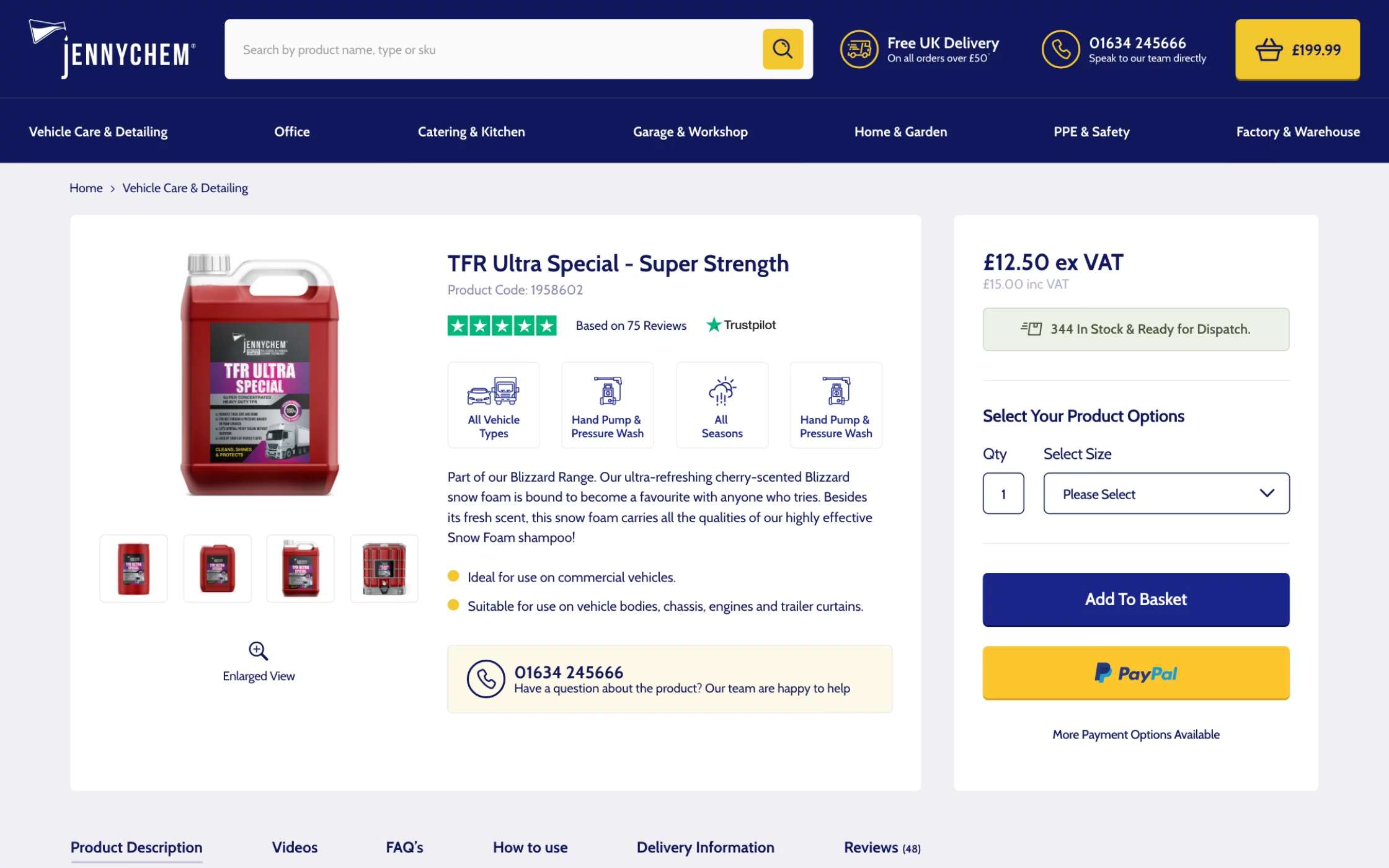
None of that is content marketing. All of it is catalogue engineering. Products carrying real dimensions, materials, compatibility, certifications, a valid GTIN and honest stock state are the ones agents can safely recommend. Products described in brand poetry with a hero image and three bullet points are the ones agents skip, because an agent that recommends something it cannot verify has failed at its job.
This is the part worth sitting with. For twenty years, being findable rewarded persuasion. Being findable now rewards being legible. Those are different skills, and they live in different departments.
Which is why this lands in the wrong part of your org
Ask who owns your product feed. In most brands the honest answer is nobody, or three people partially. The PIM belongs to ecommerce operations. The feed rules belong to whoever set up Merchant Center for Shopping campaigns, probably years ago, probably at an agency you no longer use. The attributes are half inherited from a supplier spreadsheet. The blog belongs to marketing, which is why the blog is what got optimised. Teams solve the problem they have permission to touch.
So the AEO budget goes to a content retainer and a monitoring tool, because that is what can be bought and reported on this quarter. Meanwhile the thing that actually decides whether you exist inside an AI answer sits in a data pipeline with no owner and no roadmap. Your agency is not lying to you. It is selling you the part of the problem it can bill for.
The brands that get this right treat the catalogue as commercial infrastructure rather than a technical chore. We saw this with Lake Country, where merchandising outcomes turned on getting product data and the systems behind it into a state that could actually be worked with. That was before agents were buying anything. The work was justified by conversion and merchandising alone. What has changed is that the same investment now also decides your visibility in the channel replacing search, which makes the business case considerably easier to sign off.
The awkward diagnostic
Here is a question to put to your team this month, and the answer will tell you more than any AI visibility report.
If a shopper asked Gemini to find them your best-selling product in a specific size, in stock, deliverable by Friday, with the returns policy stated, could the machine answer without guessing?
Most brands cannot. Not because the data does not exist, but because it exists in four systems that agree with each other roughly once a day, and an agent asking at 11am gets a version of the truth from last night. That gap was tolerable when a human absorbed it by clicking around your site and forgiving you. An agent does not forgive. It moves to the merchant whose data is coherent and recommends them instead.
The same gap is why the fix is rarely a plugin. It is usually integration work between the PIM, the ERP, the stock system and the storefront, so that one version of a product exists and everything downstream reads from it. That is the sort of integration between systems that has always been justified by cleaner operations and fewer manual corrections. Agentic commerce simply raised the price of not doing it.
What to do about it this year
Not much of this is exotic. Most of it is a reallocation.
Move a meaningful share of the AEO budget from content production to catalogue quality, and put a name against product data as an owner with a roadmap, not a ticket queue. Judge it on completeness, accuracy and freshness rather than on words published. If your feed cannot reflect a price or stock change within about fifteen minutes, that is the constraint to fix first, and it is an engineering decision rather than a marketing one.
Then get eligible. Merchant Center configured properly, returns and shipping structured, the UCP attributes populated for the products you actually want agents selling. It is unglamorous and it is the entry ticket.
Keep the content work, but demote it to what it is: how your brand sounds once it has been chosen, and how a model verifies claims your feed makes. It is the corroboration layer, not the mechanism. There is also a real question about how much of your AI operating budget should go to models at all versus to the data underneath them, which is worth asking honestly before the next AI investment gets approved.
We would rather tell you this than sell you another retainer producing articles for an audience that is increasingly a machine reading your JSON. The brands that are early here will not win because they published more. They will win because when an agent asks a direct question about their product, there is a correct, current, verifiable answer waiting, and their competitor's answer is a maybe.
If you are working out where AI search actually sits in your plan, and who in your business should own it, that is a conversation we are happy to have.