

For years, customer experience in ecommerce was treated as a finishing touch: worth having when budget allowed, first to be trimmed when it did not. That framing is now backwards. As acquisition gets more expensive, products converge, and customers grow harder to impress, the experience you deliver has quietly become one of the few advantages that is genuinely difficult for a competitor to copy. It is not a nice-to-have. It is increasingly where the margin is.
The shift is structural. When it cost little to acquire a customer, a mediocre experience was survivable because you could always buy the next one. Now that each customer costs more to win, keeping and growing the ones you have is the only sustainable model, and experience is the thing that determines whether they stay. The economics have moved underneath a lot of brands that have not updated their thinking.
Why experience became the advantage
Three forces converged. Acquisition costs rose as the ad platforms matured and competition intensified. Products became easier to copy, so differentiation on features alone got harder to hold. And customers, used to the best experiences in any category, started judging every brand against that standard rather than against its direct rivals. Together these mean the experience is often the most durable thing a brand has left to compete on.
Durable is the key word. A competitor can match your price overnight and your product within a season. A genuinely better experience, built into how the whole operation works, is far harder to replicate, because it is not one feature but the sum of many decisions made consistently over time. That is exactly what makes it valuable, and exactly why it cannot be bolted on cheaply at the end.
Experience is the whole journey, not the website
The common mistake is to reduce customer experience to the website. The site matters, but the experience is the entire journey: how easy you are to find and understand, how the product arrives, what the unboxing feels like, how a problem gets handled, whether the follow-up is useful or just more noise. Every one of those moments either builds the relationship or quietly erodes it.
This is why experience cannot live in one team. It is the product of decisions made across marketing, operations, service and development, and it is only as strong as the weakest link in the chain. A brand can have a beautiful site and lose the customer at delivery, or win the sale and lose the relationship in how it handles a return. Treating experience as a whole is what separates the brands that compound loyalty from the ones that leak it.
The brand and performance tension
Experience is where the old tension between brand and performance dissolves. A considered experience is both a brand statement and a performance lever: it makes the brand feel premium and it directly lifts retention, referral and lifetime value. The brands winning now have stopped treating those as competing goals and started seeing the experience as the place they reinforce each other.
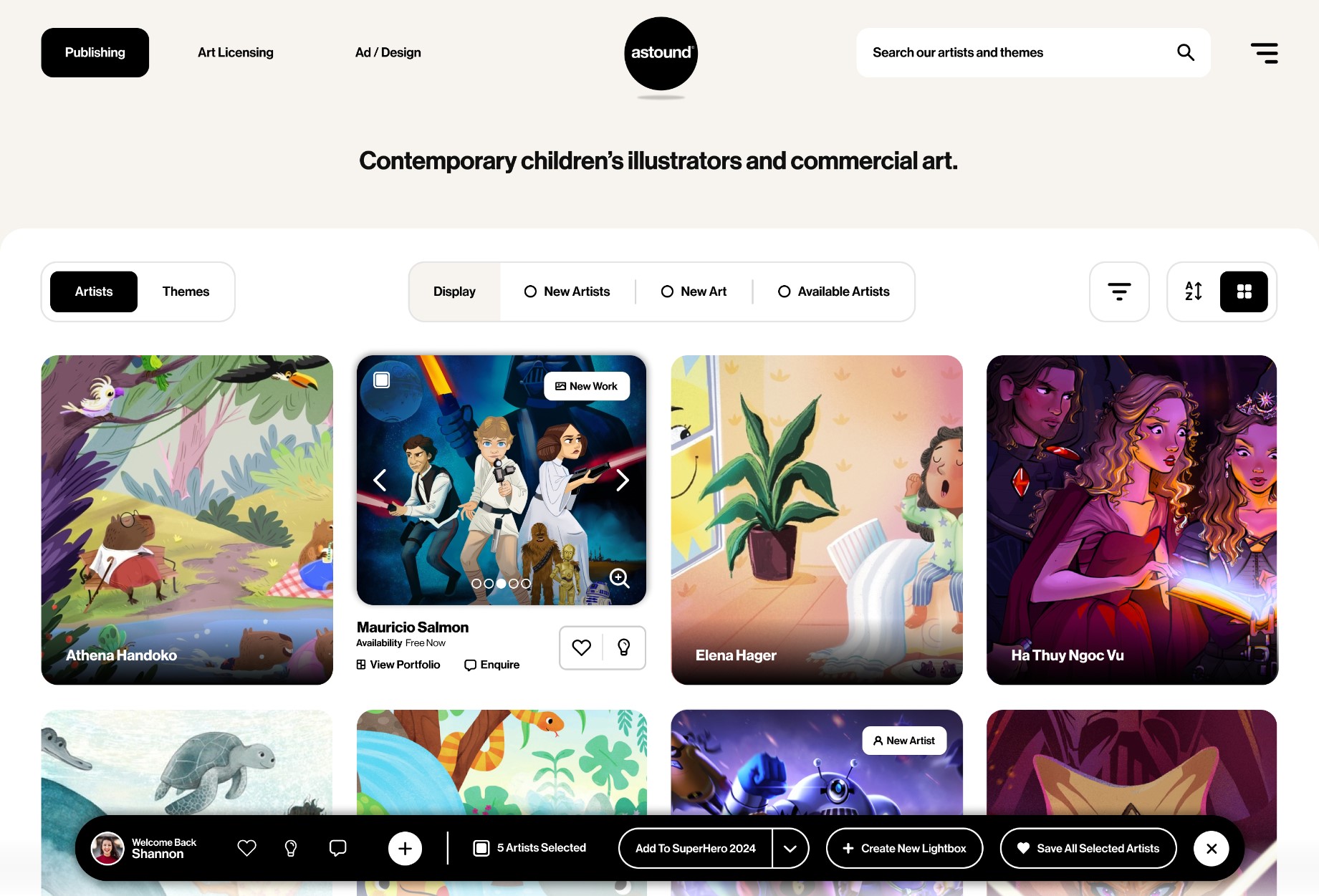
Get that integration right and the same investment works twice, building equity and driving revenue at once. It is the kind of joined-up thinking we bring to experience and UX work for established brands, and it is what we delivered with partners like Astound, where the experience itself became the differentiator.
Service is the experience most brands neglect
Ask a brand about its customer experience and it will usually describe the buying journey. Ask its customers, and they will often talk about what happened when something went wrong. How a brand handles a late delivery, a faulty item or a confused query is the part of the experience that gets remembered and retold, and it is the part most brands resource as a cost to minimise rather than a moment to win.
This is a strategic mistake hiding as an operational one. The problem moment is precisely when loyalty is decided. A customer whose issue is handled well does not just stay, they often become more loyal than if nothing had gone wrong, because they have now seen that the brand stands behind what it sells. A customer left to chase and argue is gone, and they tell others on the way out.
Treating service as part of the experience, rather than a separate complaints function, is one of the clearer dividing lines between brands that retain and brands that churn. It costs more in the moment and returns far more over the relationship, which is exactly the trade most short-term thinking gets wrong.
Measure it like it matters
If experience is a margin lever, it deserves to be measured like one. That means tracking the things that reveal whether the experience is working: repeat rate, referral, the cost and frequency of complaints, the share of customers who come back without being paid to. Brands that only measure acquisition will keep funding acquisition, because that is the only place they can see returns. Measuring experience is what makes investing in it defensible.
The brands that treat experience as overhead will keep trimming it to hit a quarter and keep wondering why loyalty is thin and acquisition costs keep climbing. The ones that treat it as the margin will quietly pull ahead, because they are competing on the thing that is hardest to copy. The advantage does not arrive in a single quarter, which is why the short-term thinkers never build it and the patient ones rarely lose it once they have.
Consistency is the hard part
The reason experience is so durable as an advantage is the same reason it is so hard to deliver: it requires every part of the business to hold the same standard, every time. One brilliant touchpoint cannot rescue a journey that fails elsewhere. A customer who is delighted by the unboxing and then mishandled on a return remembers the return. Experience is judged at its weakest point, not its best, which is a far higher bar than most organisations are structured to clear.
That difficulty is exactly why it pays. If experience were easy, everyone would have it and it would differentiate no one. The brands that pull ahead are the ones willing to do the unglamorous, cross-functional work of making the whole journey consistently good, rather than chasing one impressive moment and hoping it carries the rest. The advantage is real precisely because it is hard to copy.
Delivering that consistency is an operating-model question as much as a design one. It means someone owning the experience end to end rather than each team owning its own slice, and it means measuring the journey as a whole rather than optimising each step in isolation. Without that ownership, the experience fragments along the same lines as the org chart, and the customer feels every seam.
Where to start
Begin by mapping the real journey your customer takes, end to end, and finding the moments where it quietly disappoints. They are rarely where you expect, and they are almost always fixable once you can see them. The brands that win on experience are not the ones with the biggest budgets, they are the ones who looked honestly at their own journey and fixed what they found. That clear-eyed audit of the whole experience, end to end, is exactly what our ecommerce consultation is built to deliver.