Most ecommerce brands run social media like a treadmill. Post daily, chase the algorithm, measure success in likes and follower counts, and never quite connect any of it to revenue. The team is busy, the calendar is full, and the honest answer to what it all returns is a shrug. That is not a social media strategy, it is a content habit, and it persists because the activity feels productive even when it is not.
The reframe is to treat social as what it actually is for a commercial business: a channel that should earn its place against every other use of the same time and money. The moment you judge it on commercial outcomes rather than vanity engagement, most of what fills the content calendar falls away, and what remains gets sharper, because it finally has a job to do.
The vanity-metric trap
Likes, follows and reach are comfortable because they are easy to grow and easy to report, and they feel like progress. They are also almost entirely disconnected from whether the business is better off. A post can perform beautifully on every engagement metric and sell nothing, and a brand optimising for those metrics will keep producing more of exactly that: content that performs and does not convert.
The trap is that the treadmill is self-justifying. Engagement went up, so the strategy is working, so keep posting. The question of whether any of it moved revenue never gets asked, because the metrics that would answer it were never the ones on the report. Years can pass this way, with a busy, well-liked social presence that contributes nothing to growth.
Decide what social is actually for
Social can do several commercial jobs, but it cannot do all of them at once, and pretending otherwise is why so many accounts drift. It can drive direct sales, build the brand and demand that other channels harvest, support customers, or feed first-party data and community. Each of those implies a different approach and a different measure of success. A brand that has not decided which job its social is doing is, in practice, doing none of them well.
Choosing deliberately is the whole shift. If social is a demand-creation channel, judge it on its contribution to demand, not on direct sales, and connect it to the rest of your marketing so the credit is visible. If it is a direct-response channel, hold it to commercial return. What you cannot do is run it for engagement and then wonder why it does not pay.
Where social fits the wider mix
Social rarely works as an island, and judging it as one is part of the measurement problem. It often does its most valuable work upstream, creating awareness and intent that show up later as branded search, direct visits and better performance from paid channels. Measured only on its own last-click sales, that contribution is invisible, and the channel gets cut for failing at a job it was never doing.
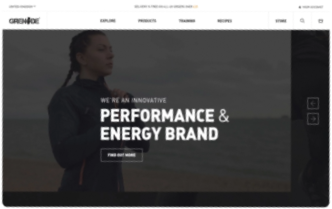
This is why social belongs in an integrated view of the whole funnel rather than a siloed content plan. Run through a proper social strategy that knows its role in the mix, it stops being a treadmill and becomes a lever. It is the kind of joined-up commercial thinking we brought to growth work for brands like Grenade.
Quality of intent over quantity of posts
Once social has a commercial job, the obsession with volume looks misplaced. The question stops being how many posts a week and becomes whether the content is doing its defined job for the right audience. Often that means fewer, better, more intentional posts rather than a relentless stream, because the stream was only ever feeding the algorithm, not the business.
This is liberating for teams stuck on the treadmill. The pressure to post constantly eases, replaced by the clearer and more rewarding task of making content that actually contributes. Less noise, more purpose, and a channel that finally earns its keep.
Organic reach is rented, and the rent keeps rising
There is a structural reason the treadmill fails that goes beyond vanity metrics. Organic social reach is not something you own, it is something the platforms lend you and steadily withdraw. The reach that a post earned a few years ago for free now costs money to achieve, and that trend only runs one way. A strategy built on the assumption of free organic reach is building on ground that is being pulled out from under it.
This changes what social can sensibly be for. Chasing organic reach with ever more content is running faster on a treadmill that is speeding up, spending real effort to stand still. The brands that adapt treat organic social as a place to deepen relationships with an audience they can reach by other means, and they make deliberate, measured choices about where paid amplification genuinely earns its return, rather than hoping volume will outrun the algorithm.
The deeper implication is ownership, the same theme that runs through every durable channel. Reach you rent from a platform can be repriced or removed at will, while an audience you can contact directly, through email, through your own data, through genuine community, is yours. Social is most valuable when it feeds those owned assets rather than substituting for them, building a relationship you keep rather than renting attention you will have to keep paying for.
None of this means abandoning organic social or chasing only direct sales. Brand-building on social is genuinely valuable, but it has to be pursued as brand-building, measured on the things brand work actually moves, awareness, consideration, the demand that surfaces elsewhere, rather than smuggled in under a vague banner of engagement and never held to account at all. The problem was never that brand work is unmeasurable, it is that the treadmill measured the wrong thing and then stopped asking.
The brands that get real value from social tend to do less of it, more deliberately, with a clear view of what each piece is for and how its contribution will be judged. That clarity is what turns a cost centre that produces likes into a channel that produces customers, or demand, or data the rest of the business can use. The volume was never the point. The purpose was.
Make it earn its place
The discipline is the same one that fixes most marketing waste: judge the channel on commercial contribution, decide what job it is doing, and measure it honestly against that job. Social that is run this way is a genuine asset. Social run as a content treadmill is a cost that hides behind flattering numbers.
If your social presence is busy and well-liked but you cannot say what it returns, that gap is worth closing, because a channel nobody can hold to a commercial outcome is a channel quietly spending budget on the wrong measure of success. The fix is rarely more content and almost always more clarity about what the content is for, and a willingness to stop measuring success by the numbers that flatter rather than the ones that matter. Our marketing consultation is built to connect channels like social to the commercial outcomes that actually matter.