

Search for WooCommerce SEO advice and you will get a checklist: install this plugin, fill in these fields, tidy these tags, generate a sitemap. None of it is wrong, and all of it misses the point. Technical hygiene is the price of entry, not the source of advantage. A store can tick every item on the checklist and still rank for terms that never sell, because the checklist optimises how you appear in search without ever asking whether the searches are worth appearing for.
The SEO that actually drives revenue starts from a different question. Not how do we get found, but how do we get found by people ready to buy what we sell. That is the difference between traffic and customers, between vanity rankings and commercial results, and it is where most WooCommerce SEO effort goes wrong, chasing volume on terms that bring visitors with no intention of purchasing.
The checklist is necessary and insufficient
Technical SEO matters. A store that search engines cannot crawl, that loads slowly, that has a chaotic structure or duplicate content will be held back regardless of anything else. So the checklist is real work that has to be done, and on WooCommerce, with its plugin-driven flexibility, technical hygiene takes genuine discipline to maintain. None of this is in dispute.
The error is treating that necessary work as if it were sufficient. Doing the technical basics gets you into the game, it does not win it, because every competent competitor has done the same. Advantage comes from what the checklist never addresses: which searches you target, and how well your content and pages serve the intent behind them. That is strategy, not hygiene, and it is where the returns are.
Commercial intent is the whole game
Search terms are not equal. Some signal a ready buyer comparing options or looking for a specific product, and some signal idle curiosity that will never convert. A brand that ranks brilliantly for high-volume, low-intent terms gets traffic and little revenue, while a brand that targets the less glamorous, lower-volume terms where buying intent is high gets fewer visitors and far more customers. Volume flatters, intent pays.
This reframes the entire effort. Keyword strategy becomes a commercial exercise, mapping the terms your actual buyers use at the point of deciding, and prioritising those over whatever has the biggest search numbers. It is the same commercial-intent thinking that underpins effective search strategy generally, applied to the specifics of a WooCommerce catalogue.
Your category and product pages are the engine
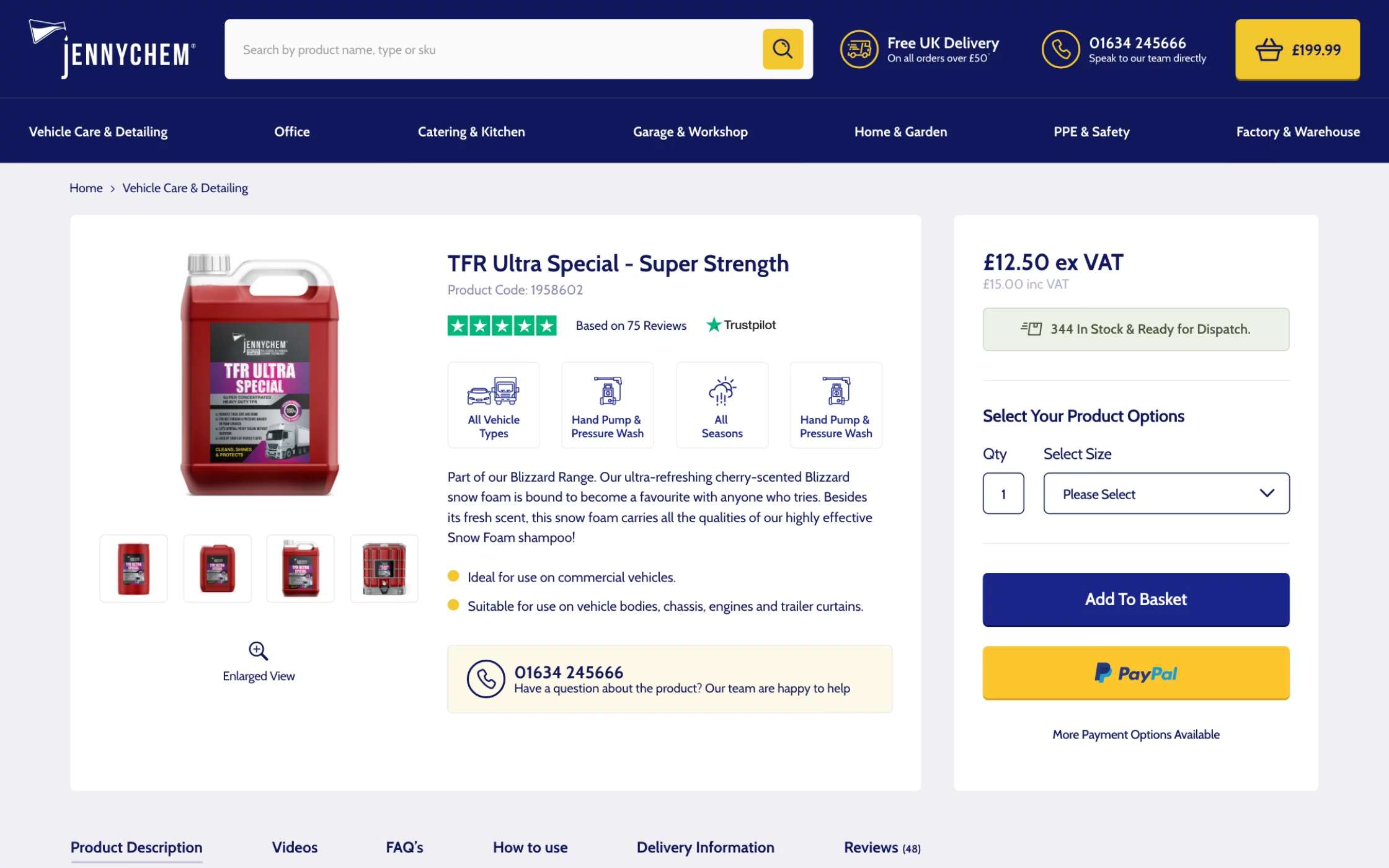
For an ecommerce store, the pages that matter most for commercial SEO are usually the category and product pages, because those are where buying-intent searches land. Yet they are often the most neglected, treated as functional listings rather than pages designed to rank for and serve real purchase intent. A brand that invests in making these pages genuinely useful and well-targeted is investing exactly where the commercial searches arrive.
On a WooCommerce store this takes deliberate work, because the default output is rarely optimised for the specific intent of your buyers. Getting it right turns the core of your catalogue into a search asset rather than a set of pages that merely exist. It is the kind of commercial SEO work we have done for brands like Grenade.
Measure SEO in revenue, not rankings
The clearest sign of checklist thinking is measuring SEO success by rankings and traffic. Those are means, not ends. A brand that celebrates climbing the rankings for a term that never converts is celebrating the wrong thing, and a brand that judges its SEO by the revenue and qualified demand it generates is measuring what actually matters. The metric you choose shapes the strategy you pursue, and ranking-led metrics lead straight back to the checklist.
Revenue-led measurement changes the priorities. It pushes effort toward the commercial-intent terms and the pages that serve them, and away from the volume chasing that produces impressive reports and disappointing results. Measure the right thing and the strategy corrects itself.
Content earns the rankings the checklist cannot
The other half of commercial SEO that checklists ignore is content that genuinely serves the intent behind a search. Ranking for a buying-intent term is not achieved by filling in meta fields, it is earned by being the most useful answer to what the searcher actually wants, whether that is a comparison, a clear specification, the reassurance that resolves a hesitation, or the detail that justifies a price. Search engines have spent years getting better at rewarding genuine usefulness, and they will keep closing the gap on anything more superficial.
For an ecommerce store this means the content on and around the commercial pages does real work. A category page that helps a buyer choose, a product page that answers the questions a buyer actually has, supporting content that captures intent earlier in the journey: these earn rankings the checklist cannot, because they earn the thing the rankings are trying to reward. The brands that win on commercial SEO are usually the ones that treated their key pages as answers to real questions rather than as listings to be indexed.
This is also where the shift to AI-mediated search rewards the same discipline. As answer engines increasingly mediate discovery, the content most likely to be surfaced and cited is the genuinely useful, well-structured, intent-serving content, the same content that earns conventional rankings. Building for real intent is not a bet on one channel, it is the durable approach that holds up as discovery itself changes.
The practical implication is that commercial SEO and good content strategy are the same discipline, not separate ones. A WooCommerce store that treats its key pages as genuine answers to buyer questions is doing its SEO and its conversion work at once, because the same usefulness that ranks also persuades. That convergence is where the real returns sit, and it is invisible to a purely technical view.
This is also why outsourced, checklist-driven SEO so often disappoints established brands. A provider working from a generic technical checklist can tick every box and still move no revenue, because they never engaged with the one thing that matters: which searches your actual buyers make and how well your pages serve them. That requires understanding the business and its customers, not just auditing the site, which is precisely the part a commoditised checklist service leaves out. The brands that get real returns from SEO treat it as a commercial discipline informed by who they sell to, not a technical service bought by the metre.
Beyond the checklist
The takeaway is not to skip the technical work, it is to recognise it as the floor and put the real strategic effort where the returns are: commercial intent, the pages that serve it, and revenue as the measure. A WooCommerce store run this way earns traffic that converts, not just traffic that registers, and it competes on something deeper than whether the plugin fields are filled in.
If your WooCommerce SEO is technically tidy but not driving the revenue you expected, the gap is almost always strategic rather than technical. Our marketing consultation is built to point your search effort at the intent that actually sells.