

The marginal cost of a product description at your business is now close to nothing. So is the cost of a fifth ad variant, a localised size guide, a category page rewritten for a new season. Generative AI has taken the price of producing words and images down to almost zero, and most established brands have already moved it into production. The question that used to occupy your content team, how do we make more, faster, has been answered.
Which is why the expensive part of your content is no longer the making of it. It is the deciding. The decision that matters now is not whether you use generative AI, you already do. It is where you let it write in your name and where you keep it out, because the market has started pricing the difference and the price is not small.
Here is what changed under everyone at once. Generative AI crossed from pilot into full production across ecommerce during the 2025 peak season, with AI and agents influencing an estimated 262 billion dollars of global online spend. Content generation turned out to be the most mature use case of the lot: clearing SKU backlogs, cutting the cost of product pages at scale, standardising voice across catalogues that had drifted for years. That part worked. If your team is drafting descriptions, alt text and translations with a model, you are not early any more, you are on time.
The second thing that happened is the one most brand plans have not caught up with. In 2025 "slop" was named word of the year, defined as low quality digital content produced in quantity by machine. Consumer preference for AI generated creator content fell from 60 percent in 2023 to 26 percent in 2026. Nearly half of consumers now say they prefer brands that keep generative AI out of anything customer facing, and the rejection is sharpest exactly where you sit: fashion, premium goods, anything built on taste. In the first half of 2026 brands including Aerie, Equinox and Almond Breeze ran campaigns calling out AI slop by name, and Apple added "made by humans" to the end of its shows. The tools got cheaper and better at the same moment the audience started punishing the obvious use of them.
Both things are true at once, and that is the whole problem to solve. Generative AI genuinely lowers the cost of content, and the visible use of it genuinely lowers trust in a premium brand. A policy of "use it everywhere" and a policy of "ban it" are both wrong, because they treat a portfolio decision as a single switch. The brands getting value out of this in 2026 made a sharper call. They decided, surface by surface, where the machine writes and where it does not.
Separate the volume problem from the voice problem
Most of your catalogue is a volume problem. Spec fields, dimensions, care instructions, the two hundred size variants nobody was ever going to write by hand, translations into markets your team does not staff. This is work that was either not getting done or getting done badly, and a model does it faster and more consistently than a rushed junior on a Friday. Point generative AI straight at it. The risk is low because the brand was never really present in a bullet list of fabric weights.
A small part of your content is a voice problem, and it carries almost all of your differentiation. The launch copy for the flagship line. The brand story on the about page. The email that goes out when something matters. The product description on the hero SKU that a customer reads three times before spending 400 pounds. These are the surfaces where sameness costs you, because a model trained on the same public text as everyone else's model regresses toward the same middle. The output is fluent, competent and indistinguishable, which is fine for a spec sheet and quietly fatal for the piece of writing that is supposed to make someone feel your brand is not the others.
Draw the line by surface, not by blanket rule. The useful audit is not "are we using AI", it is "which of our content surfaces carry the brand, and which just carry information". Most teams have never separated the two, so they either protect everything and lose the efficiency, or automate everything and lose the voice. The map is the deliverable.
Your edge is the input, not the model
When your competitor is prompting the same three foundation models you are, the model is not where advantage lives. Everyone has the same engine. The difference is what you feed it and who checks what comes out. Your voice guidelines, your own first party data on what your customers actually respond to, the annotated examples of copy that sounds like you and copy that does not, the editorial judgement of a person who owns the brand and can tell the difference. That is the moat, and it is a human one.
The industry has a name for the operating model now: controlled generative. The pattern is that AI drafts, a review layer evaluates the draft against brand voice, legal and cultural rules before anything ships, and a human owns the final edit on anything that carries weight. The plain version of this is older than the technology. A model is a very good first drafter and a poor final editor. It removes the blank page, it does not remove the responsibility for what your brand says. Brands that skip the review layer are not moving faster, they are shipping the regression to the mean straight to the customer and finding out later why the flagship page stopped converting.
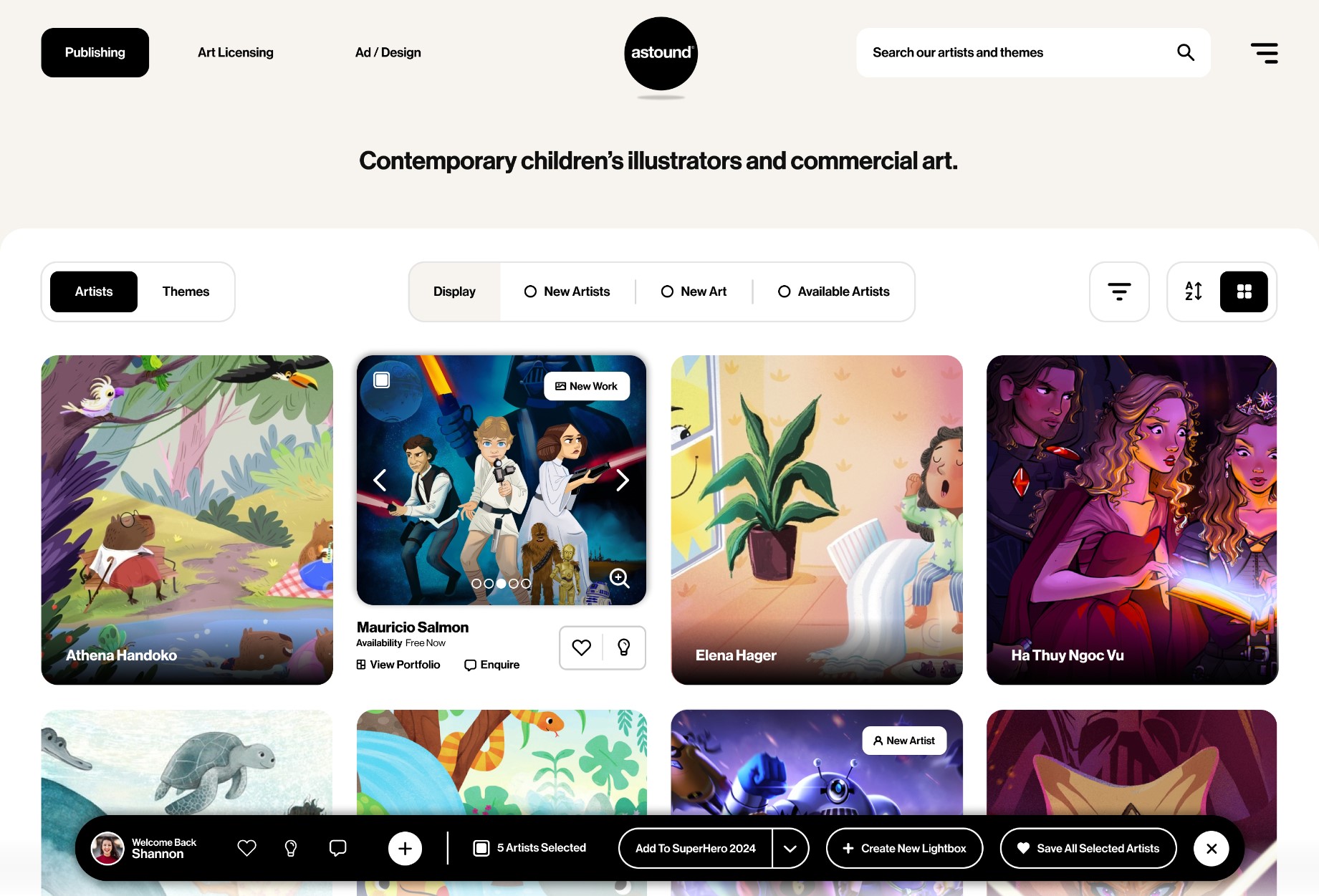
This is where the build matters. Getting generative AI into your content operation well is a systems job, not a subscription. It means connecting your product data, your brand rules and your review workflow so the model is drawing on what is true about your business rather than the open internet. When we built the platform behind Artist AI, the hard part was never the generation, it was the plumbing and the guardrails that kept the output usable and on brand at scale. That is the part that separates a content operation that compounds from one that produces confident nonsense quickly.
Measure what you are actually risking
The metric that made sense in the backlog phase was throughput. Words per hour, pages cleared, cost per description. Those numbers all moved the right way, which is why they are seductive and why they are now the wrong thing to watch. Nobody loses a premium brand because they published product copy too slowly. They lose it because everything started to sound the same and the customer felt it before they could name it.
The numbers that matter on the voice surfaces are brand ones. Distinctiveness, trust, repeat purchase rate, the conversion on your hero pages specifically rather than the catalogue average. The collapse in consumer preference for AI content is not a soft signal, it is a demand signal you can now see in your own cohort data if you look. If the surfaces you automated are the ones losing repeat customers, the efficiency was borrowed against the brand and the bill is arriving. Treating brand and performance as one system rather than two teams is what lets you catch that early, because the trade shows up as a marketing number long before it shows up in a brand tracker.
What to do now
The forward move in 2026 is not more restraint and it is not more automation. It is precision. Audit your content surfaces and sort them by how much brand they carry. Put generative AI to work hard on the volume tier where it genuinely pays, and staff it properly with a review layer so quality does not drift. Keep human authorship on the handful of surfaces that carry the brand, and treat that as a deliberate investment rather than a failure to automate. The brands that win the next two years will be early on the tooling and disciplined about the line, which is a harder combination than either enthusiasm or refusal on its own.
The uncomfortable truth is that generative AI did not make content easier, it made judgement scarce. When making is free, choosing well is the entire job. The brands that keep sounding like themselves in a feed full of sameness will not be the ones that used the least AI or the most. They will be the ones that decided, on purpose, where their own voice was worth paying for.
If you are working out where that line sits for your brand, and what the operation around it should look like, that is the kind of thing we help brands get right.