Every growing brand reaches the same fork. The digital operation has outgrown what a couple of generalists can handle, and someone has to decide: do we build a proper team in-house, or do we partner with people who already have one? It is one of the larger operating decisions a brand will make, and most make it badly, on a gut feeling about control or a back-of-envelope salary comparison, rather than on a clear view of where capability and accountability should actually sit.
The decision deserves better than instinct, because getting it wrong is expensive in slow, compounding ways. Build the wrong things in-house and you carry fixed cost and management burden for capability you use intermittently. Rent the wrong things and you hand your differentiators to someone whose incentives may not match yours. The useful question is not which is cheaper, it is which model puts the right capability in the right place with the right accountability.
The £500k number is the wrong starting point
The figure usually quoted is that a full in-house digital team, with the range of skills a serious operation needs, costs a brand around half a million pounds a year in salaries, before the recruitment fees and management overhead on top. It is a real number and a useful jolt, but it is the wrong place to start the decision, because it frames the question as cost when the question is really about capability and risk.
Cost-led thinking leads to bad answers in both directions. It tempts brands to under-hire, building a team too thin to cover the breadth they need, or to reject partnership purely on day-rate without counting what building and running the equivalent in-house actually costs. The salary number matters, but only once you have answered the prior question of what capability you genuinely need to own versus what you can access more flexibly.
Build versus rent is a capability decision
The sharper frame is to sort capability into two kinds. There is capability that is core to how you differentiate, the things that are specific to your brand, your customers and your competitive edge, where owning the knowledge and keeping it close genuinely matters. And there is capability that is broad, specialised or variable, the things many brands need, that require deep expertise to do well, and that you do not use at a constant level all year round.
The first kind argues for building in-house, because it is yours and it compounds. The second kind argues for renting, because building it in-house means hiring specialists you cannot keep fully occupied, across a breadth no brand of moderate size can staff economically. Most brands need a mix, and the skill is drawing the line in the right place rather than defaulting the whole question one way.
What goes wrong when you build everything
Building a full team in-house has real failure modes beyond the salary bill. You have to recruit specialists in a competitive market, which is slow and expensive and assumes you can assess skills you may not have yourself. You need breadth, development, design, data, paid media, SEO, conversion, and a brand of moderate size cannot keep a specialist in each busy and current. And you inherit single points of failure, where one person holds critical knowledge and one resignation sets you back months.
Then there is the management overhead that never makes the salary calculation. A team needs hiring, developing, retaining and directing, which is a job in itself, usually landing on a leader who has other things to do. The cost of an in-house team is not just the salaries, it is the salaries plus the recruitment plus the management plus the underutilisation plus the key-person risk, and that fuller figure is what an honest comparison has to use.
What goes wrong when you rent everything
The agency model has its own honest failures, and pretending otherwise would be the kind of one-sided pitch this is arguing against. The classic risk is misaligned incentives, an agency paid for activity rather than outcomes, optimising for retention of the contract rather than the growth of the brand. There is the churn problem, a revolving door of account handlers who never learn your business deeply. And there is the distance, a partner who treats you as one client among many rather than as an operation they are genuinely embedded in.
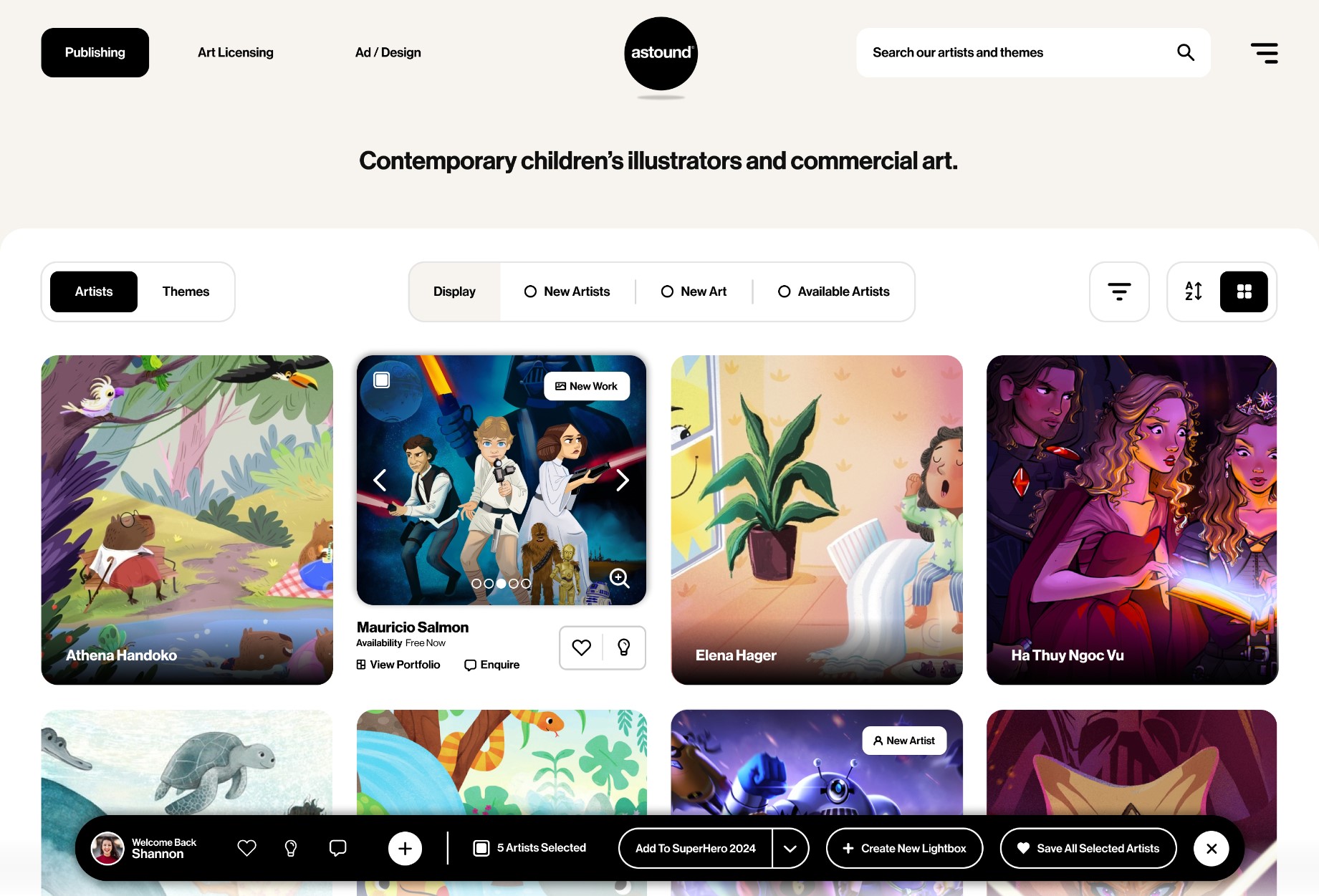
These are real, and they are why so many brands have an agency horror story. But they are failures of the wrong partnership, not of partnership itself. The model works when the relationship is built on outcomes rather than activity, when the same people stay long enough to know the business, and when the partner operates as an extension of the team rather than a vendor at arm's length. That is the difference between renting capability and merely buying hours. It is the kind of embedded, multi-year partnership we have run with brands like Astound.
A framework for the decision
Put each capability through three questions. First, is it core to how we differentiate, or is it specialised work many brands need done well? Core and specific argues to build; broad and specialised argues to rent. Second, do we use it at a constant level, or does demand vary? Steady demand supports a hire; variable demand wastes a salary and suits a partner you can flex. Third, can we realistically recruit, manage, retain and keep this person current, given what we are and what we do? If that is a stretch, renting the capability is usually the more honest answer.
Run every function through that and the picture clarifies. Some capability clearly belongs in-house, close to the brand and used constantly. Some clearly belongs with a partner, specialised and variable. The mistake is answering the whole question with one instinct, in-house for control or agency for cost, rather than deciding function by function on capability, demand and what you can realistically run.
The hybrid most brands actually need
For most established brands the answer is not pure in-house or pure agency, it is a deliberate hybrid. A lean internal team that owns the brand, the strategy and the capability that genuinely differentiates, paired with a partner that provides the breadth, the specialist depth and the flex that would be wasteful to build. Done well, the partner becomes an extension of the internal team rather than a separate supplier, and the brand gets the control where control matters and the flexibility everywhere else. That hybrid, the internal digital team a brand needs without the full cost and overhead of building all of it, is exactly the model our ongoing support and partnership is built around.
The reason this hybrid wins is that it matches the structure to the reality: some things should be owned, most things are better accessed, and the line between them is specific to each brand. A brand that designs its operating model around that, rather than defaulting to one extreme, gets a better result for less money and less risk than either pure option.
The real test is outcomes and accountability
Whichever way the decision goes for a given function, the test of whether it is working is the same: clear outcomes and clear accountability. An in-house team with vague goals and no accountability fails as surely as an agency paid for activity. The question is never just who does the work, it is whether whoever does it is measured on the outcomes the business actually cares about and held to them.
So the build-versus-rent decision is really a design problem: put each capability where it will be most accountable for the outcome that matters, and structure the relationship, internal or external, around that outcome rather than around hours or headcount. If you are weighing up how to structure your digital team for the next phase of growth, our ecommerce consultation is built to help you draw that line in the right place.