When a brand decides to expand into a new country, the conversation almost always starts with marketing. Which channels, which messages, how much to spend to build awareness in the new market. That framing feels natural, and it is the reason so many international expansions disappoint. Going global is not primarily a marketing problem. It is an operations problem wearing a marketing costume, and the brands that learn this late pay for the lesson.
The uncomfortable truth is that creating demand in a new market is the easy part. You can buy attention almost anywhere. The hard part, the part that quietly decides whether the expansion succeeds or becomes an expensive distraction, is everything that has to happen after a customer in that market decides to buy. Fulfilment, duties, payments, returns, support, localisation: the unglamorous machinery that turns demand into a satisfied customer. Get that wrong and no amount of marketing saves you.
The seductive marketing story
It is easy to see why expansion gets framed as marketing. Marketing is visible, exciting and within the comfort zone of the people usually driving growth. Launching campaigns in a new market feels like progress, produces impressive early traffic, and generates the kind of activity that looks good in a board update. The first orders arrive and everyone feels vindicated.
Then the operational reality lands. The orders that marketing won have to be fulfilled across a border, with duties and taxes nobody fully modelled, through a checkout that does not offer the payment methods locals expect, with shipping times that disappoint and a returns process that is painful on both sides. The marketing worked. The operation could not honour what the marketing promised, and the early wins curdle into refunds, complaints and a quietly damaged reputation in a market you have only just entered.
Where global actually breaks
The failure points are predictable, which is what makes the marketing-first framing so frustrating. Logistics and fulfilment: getting product to the new market reliably and affordably, which is a genuine supply-chain question, not a campaign. Duties and tax: the compliance and cost of selling across borders, which can quietly destroy the margin the marketing plan assumed. Payments: offering the methods each market actually trusts, without which conversion collapses regardless of demand.
Then returns, which are harder and costlier internationally and which customers in many markets treat as a basic expectation. Customer support in the right language and time zone. And the systems underneath all of it, which have to handle multiple currencies, tax regimes, languages and fulfilment routes without your team reconciling it all by hand. Every one of these is operational, and every one of them can sink an expansion that marketing has technically succeeded at.
Localisation is not translation
The most common shortcut, and the most revealing, is treating localisation as translation. Run the site through a translation layer, swap the currency symbol, and call the market entered. Real localisation is far deeper: the payment methods people trust, the delivery expectations they hold, the sizing and conventions they use, the customer service norms they expect, the cultural cues that make a brand feel native rather than foreign. A translated site that ignores all of that reads as exactly what it is, a foreign brand that has not really committed.
Customers notice, and they reward the brands that have genuinely localised over the ones that have merely translated. This is part of why expansion is an operations and experience problem more than a marketing one. The work that makes a brand feel local to a new market is overwhelmingly operational and experiential, not promotional, and it is the work most likely to be skipped in a marketing-led plan.
The platform and systems question
Underneath all of this sits a decision most expansion plans treat as an afterthought: whether the platform and systems can actually support selling in multiple markets cleanly. Multi-currency, multi-language, multiple tax and fulfilment configurations, all managed without a tangle of manual workarounds. A brand whose platform was set up for one market often discovers, mid-expansion, that the foundation cannot support what it is trying to do, and that retrofitting it is a major project landing at the worst possible time.
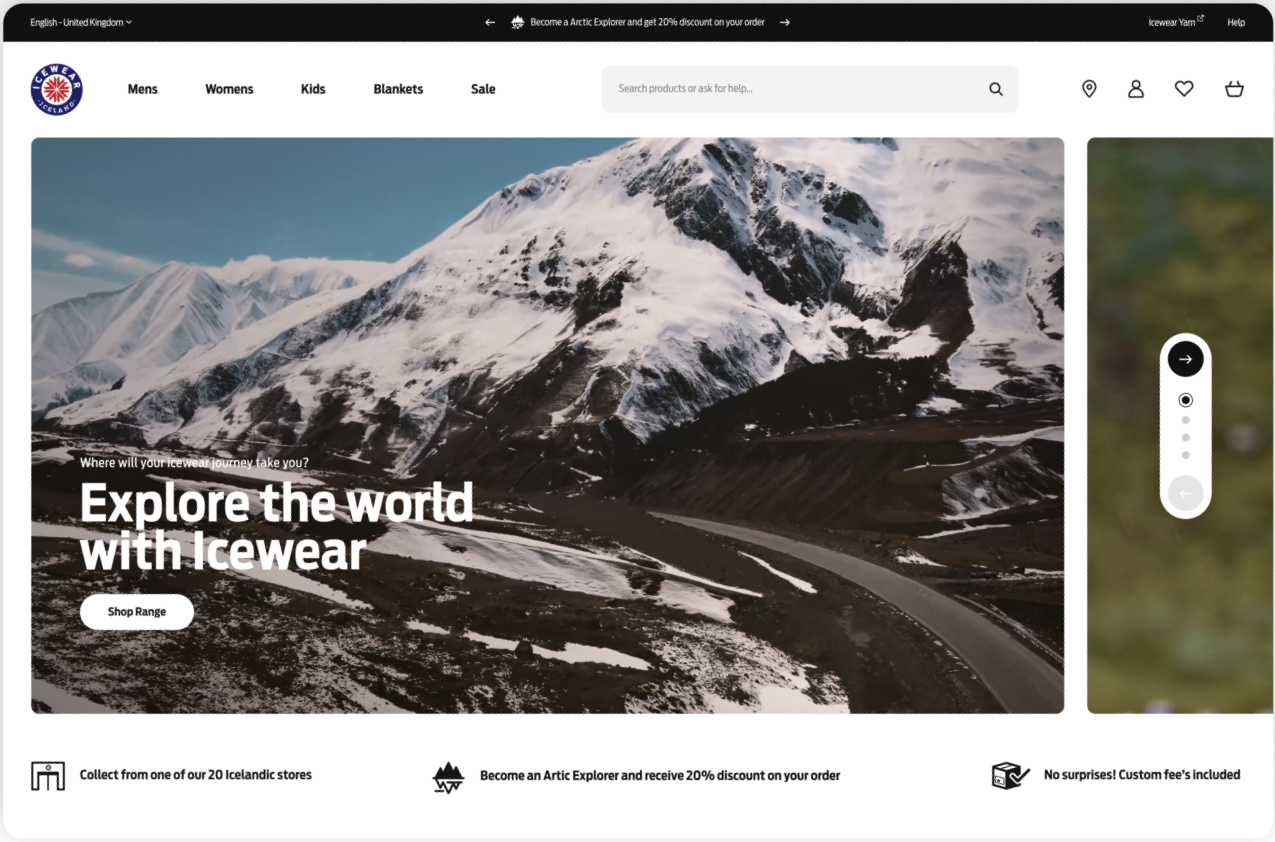
This is why serious expansion starts with an honest look at the operational foundation, often involving real systems and integration work and a platform genuinely built for multiple markets, before a penny goes into marketing the new region. It is the kind of multi-market groundwork we have done for brands like Icewear, whose growth depends on selling cleanly across borders and channels.
Sequence markets, do not sprinkle them
The marketing-led approach tends to spread effort thin, dabbling in several markets at once because campaigns are easy to switch on everywhere. The operations-led approach does the opposite: it goes deep in one market, gets the whole machine working there, and only then moves to the next. Depth beats breadth, because a brand that half-enters five markets succeeds in none, while a brand that fully enters one builds a repeatable operational template for the rest.
This sequencing is a discipline that only makes sense once you accept expansion as an operational undertaking. If it were just marketing, sprinkling campaigns across markets would be reasonable. Because it is operations, each market is a serious commitment that has to be earned before the next, and the brands that respect that compound their international growth while the sprinklers burn budget on markets they never properly served.
The margin trap nobody models
There is a financial version of this mistake that deserves its own warning. The economics that justified the expansion are almost always built on the home market's cost structure, then quietly assumed to hold abroad. They rarely do. Cross-border shipping costs more, duties and import taxes take a slice, local payment processing carries its own fees, higher return rates erode the rest, and the price the market will bear may be lower than at home. Stack those together and a product that is comfortably profitable domestically can be marginal or loss-making in the new market before a single pound of marketing is counted.
This is why expansion has to be modelled on the destination market's real economics, not the home market's, and why it is a finance and operations question as much as a marketing one. A brand that markets hard into a market where the unit economics do not work is simply buying revenue at a loss and calling it growth. The discipline is to prove the operation can serve the market profitably first, then turn the marketing on, rather than discovering the margin problem after the campaigns have done their job.
Test the operation before the marketing
The practical reversal is simple to state. Before you market a new region, prove you can serve it. Can you fulfil reliably and affordably, handle the duties and tax, offer the right payments, manage returns, support customers properly, and run it all without manual chaos? If the honest answer to any of these is no, the marketing is premature, however tempting the demand looks.
This is not an argument against international growth, which is one of the biggest opportunities available to an established brand. It is an argument for entering markets in the right order: operations first, marketing second. The brands that do it this way expand profitably and durably. The ones that lead with marketing tend to create demand they cannot honour and reputations they then have to repair. If you are weighing up a new market, our ecommerce consultation is built to pressure-test whether the operation is ready before the marketing spend starts.